
Creating the Handcrafted Floral Fabric Patterns. Teresa Stripe: A Tribute to My Mum and Polish Folk Design Through Lino-Print.

Updated: Mar 22
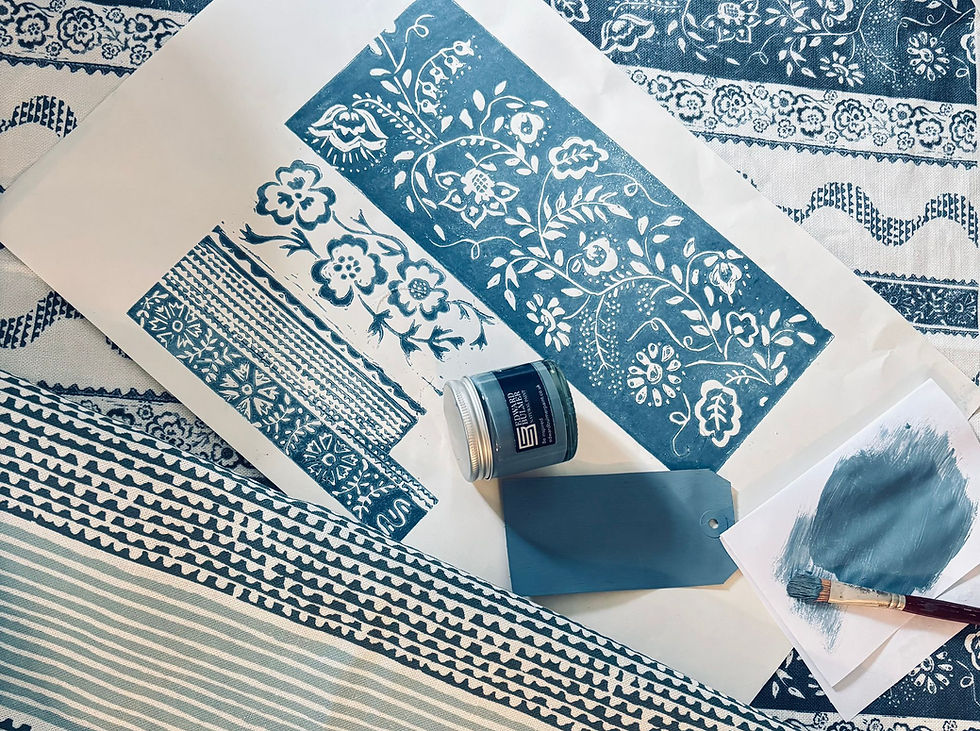
Creating a new pattern for wallpaper and fabric is a journey filled with creativity, trial, and personal meaning. For me, this journey became even more special when I decided to base my design on traditional Polish folk embroidery and dedicate it to my beloved Mum. The result is the Teresa Stripe, a lino-print pattern that carries both cultural heritage and heartfelt memory. In this post, I will share the process behind creating this pattern, from initial sketches to the final choice of scale, and how it transforms spaces with its bold presence.
Designing the Linocut Handcrafted Floral Fabric Patterns

Lino-printing involves carving a design into a linoleum block, which is then inked and pressed onto paper or fabric. This technique allows for bold lines and textures that echo the hand-crafted feel of embroidery stitches.
I began by sketching different elements on paper, experimenting with curves and shapes inspired by the embroidery. The goal was to create a stripe pattern that could repeat seamlessly but also feel dynamic and lively. After finalising the sketches, I transferred the design onto linoleum.

Carving the blocks was a meticulous process. Each curve and line had to be carefully cut to ensure clean prints. This hands-on work connected me deeply to the craft, much like the traditional embroiderers I admire.
Once the blocks were carved, I started printing test patterns on the press.
I then scanned the printed pattern and played with the layout and scale of various elements of the design on the computer.
The carving is done, the ink is rolled—now the process shifts to the press. There’s nothing quite like that first reveal, when the image finally comes to life on paper.
Trialing Different Repeat Sizes

It took me a while to get the right balance between all the elements. Once I was happy with the resultI then I had my pattern digitally printed on the fabric in four different repeat sizes to see how the pattern would look at various scales.
I struggled to choose just one as they could all work really well.
Each size brought out different qualities in the pattern. The smaller repeats highlighted the intricate curves, while the larger repeats emphasised the overall rhythm and flow of the stripes and ribbons.
Choosing the Largest Repeat for Maximum Impact

After comparing the samples, I chose the largest repeat for the Teresa Stripe. This scale has a wow factor and works really well in any interior. When used as curtains, bench cushions, or headboards, the pattern looks grand and elegant. It commands attention without feeling busy or cluttered.
The large repeat also allows the linoprint texture to shine, showing the hand-printed nature of the design. This adds warmth and character to interiors, making the pattern feel both timeless and contemporary.
Choosing colours

Selecting the appropriate colours for my design is a significant aspect of the entire process. I often test my designs on off-white and natural linen basecloth to determine which appearance complemented the pattern better. I frequently find it challenging to limit myself to just three or four colourways and tend to include more in my collections. Deciding is difficult because the design often looks fantastic in various colours. Additionally, I enjoy catering to my clients' preferences. We can also print in bespoke colourways, which I find hugely exciting.
Honouring My Mum Through Design
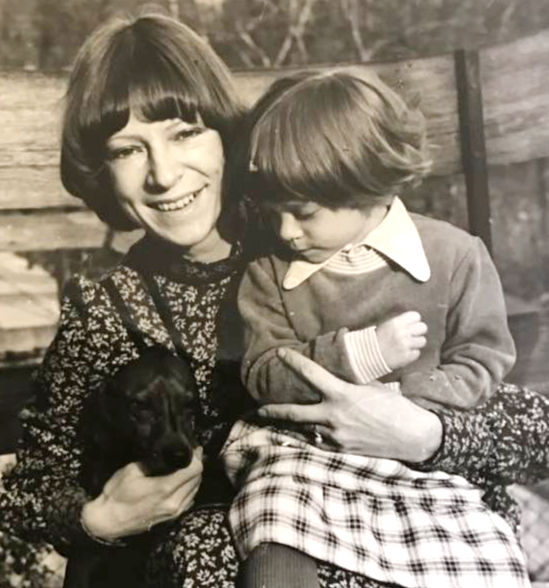
Naming the pattern Teresa Stripe was a deeply personal choice. Teresa was my Mum’s name, and this design is a tribute to her strength, warmth, and her natural interior design skills and effortless style and class in everything she did.
Creating something tangible that reflects both heritage and love gave the project a special meaning. It reminds me that design can be more than decoration—it can be a way to tell stories and keep memories alive.
Bringing Tradition into Interiors

The Teresa Stripe pattern bridges the gap between traditional craft and modern design. It shows how folk art can be reinterpreted to suit contemporary tastes while honouring its origins.
Using linoprint as a medium adds a tactile quality that digitally designed patterns often miss. I kept imperfections and different colour shading to create fabric that feel hand printed, personal and authentic.
Whether you want to refresh a living room with curtains or add some character to your sofa with a little cushion, the Teresa Stripe offers an elegant and unique option.

Finding Inspiration in Polish Folk Embroidery
Polish folk embroidery is rich with history and varies from region to region. Its intricate motifs and vibrant colours tell stories of tradition and craftsmanship passed down through generations. I wanted to capture the essence of this heritage but translate it into a modern, graphic pattern suitable for wallpaper and fabric.
I focused on embroidery from Kujawy (Kuyavia) region in north-central Poland, in particular on "Paluky" embroidery. I selected motifs that resonated with me personally and that I felt could be adapted into a linoprint style. This meant simplifying some details while preserving the flow and rhythm of the original embroidery.
The roots of Kuyavian ornamentation can be traced back to professional embroidery. In the nineteenth century, workshops run by monasteries and aristocratic courts trained young women from rural communities in fine needlework. Many of them later worked on decorating undergarments and bed linens prepared as part of dowries for wealthy brides.
Through their skill and craftsmanship, embroidery gradually found its way into the Kuyavian folk costume. Beyond fulfilling court commissions, these embroiderers sold their work at fairs and accepted private orders, reaching clients even in distant villages and helping the tradition spread throughout the region.

History of the embroidery from Paluki Region

Embroidery from Pałuki (part of Kuyavian region) originates from the traditional women’s costume of the Pałuki region. Its strong development at the turn of the nineteenth and twentieth centuries was closely tied to resistance against Germanisation during the partitions of Poland. Traditional dress held deeper meaning. It expressed a sense of local belonging while also affirming a broader Polish identity. Wearing it became more than a matter of style — it was a quiet yet powerful sign of cultural pride and patriotism.
Folk dress

Kuyavian embroidery was originally used to adorn traditional women’s costumes, decorating bonnets, ruffs, collars, cuffs aprons, and white or red petticoats.
Men’s clothing, however, was never embroidered. The Kuyavian costume saw its peak development between 1850 and 1870, remained common until 1914, and gradually declined after 1918.
All above photographs come from the collections of the Ethnographic Museum in Toruń:
1. Tulle bonnet, maker unknown, Radziejów, before 1939, MET/3352, photo by M. Kosicki
2. Bonnet with decorative bands, Kcynia, c. 1902, Municipal Cultural Centre and Library named after Klara Prillowa in Kcynia, photo by B. Górka
3. Shirt cuff, maker unknown, before 1939, Municipal Cultural Center and Library named after Klara Prillowa in Kcynia, photo by B. Górka
4. Apron, maker unknown, before 1939, Kcynia, Municipal Cultural Centre and Library named after Klara Prillowa in Kcynia, photo by B. Górka
5. Apron, H. Derezińska, Kobyliniki, photo by B. Oleszek
6.Apron, maker unknown, before 1939, Kcynia, Municipal Cultural Centre and Library named after Klara Prillowa in Kcynia, photo by B. Górka
Embroidery Motifs

All above photographs come from the collections of the Ethnographic Museum in Toruń.
The embroidery is focused on floral elements observed in nature including flowers, twigs and leaves (often oak and vine leaves), fruits, ears of corn, grapes, plums and pears, flowers, like roses and poppies, bluebells, cornflowers and daisies.
In Pałuki embroidery, the fabrics are predominantly white, creating a clean and understated base for decoration. The main exceptions are the red petticoat and the striped aprons, most often in white and red, sometimes paired with blue, pink, or green.
Of special significance are the intricately embroidered tulle bonnets, richly embroidered with white thread; with wide embroidered "ribbons"—referred to locally as tapes/bands (bandy)—which are characteristic elements of the traditional folk costume from the Kuyavia region.
Modern Days
After 1945, as folk costumes disappeared, Kuyavian embroidery began to fade and survived mainly in the memories of the oldest generation. In the 1950s, museums in Włocławek and Toruń (which kindly let me use their images in this blog) revived the tradition through courses and competitions, sparking renewed interest among local women.
Since then, Kuyavian embroidery has endured by adapting to modern forms — from table linen inspired by traditional aprons and petticoats to contemporary garments and stage costumes — ensuring the patterns continue to live on.
Visiting Toruń

I highly recommend visiting Toruń when you plan your next trip to Poland.
This lesser-known destination is one of Poland’s oldest cities and dates back to the 8th century.
The city is also renowned as the birthplace of the astronomer Nicolaus Copernicus (1473). His legacy can be seen in the Nicolaus Copernicus House, the monument in the Old Town, Nicolaus Copernicus University, and the city’s Toruń Planetarium.
With its rich history, Toruń is also famous for its centuries-old gingerbread tradition and beautifully preserved medieval Old Town, which was designated a UNESCO World Heritage Site in 1997. The city hosts the Camerimage International Film Festival (which I’ve attended in recent years) and is known for its vibrant cultural life.
And of course, if you—like me—are passionate about embroidery and folk costume, don’t forget to visit the Ethnographic Museum in Toruń.


Comments